

Metal edge trims are used to protect, strengthen and enhance table tops made from stone, marble, porcelain, ceramic, glass, laminate, timber and composite materials. This guide explains the key design and fabrication points to consider when specifying table top metal edge trims, including arris requirements, CNC-cut corners, material options, fixing methods and built-up table top construction.
At Metal Sheets Ltd, we manufacture bespoke edge trims in brass, stainless steel, copper and aluminium for hospitality, retail, commercial and residential interiors.
This guide is intended for designers, contract furnishers, stonemasons, furniture manufacturers and hospitality fit-out contractors specifying metal-edged table tops.
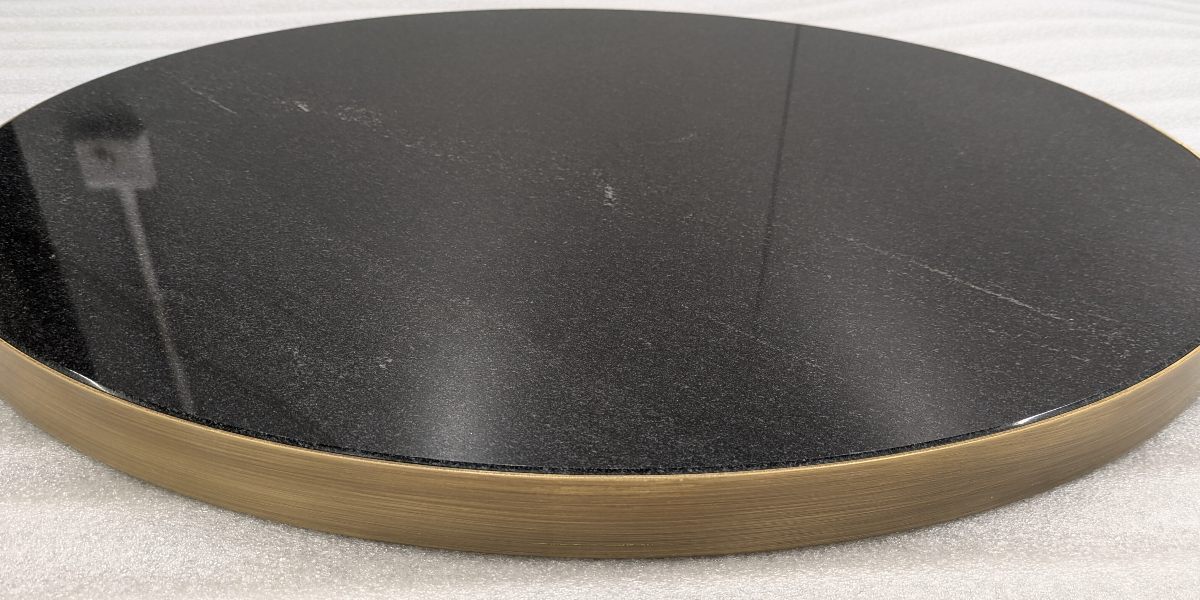
Table top metal edge trims are custom-made metal profiles fitted around the exposed edge of a table top. They can be used for decoration, impact protection, edge reinforcement or to create a more substantial furniture profile.
Metal trims are commonly used on restaurant tables, bar tables, coffee tables, reception furniture, display furniture and bespoke interior pieces where the edge detail forms part of the overall design.
For commercial enquiries, view our table top metal edge trims service page.
We produce bespoke edge trims in a range of metals, each offering a different visual effect, durability and finish.
When metal trims are fitted to stone, marble, porcelain, ceramic or glass table tops, edge preparation should be considered early in the design process. The most suitable detail will depend on how the table top is being manufactured and how the metal trim is being fitted.
For many applications, particularly stone, porcelain and glass tops supplied separately to the metalwork, we recommend a small arris of approximately 1.0mm–1.5mm on exposed top edges and corners. The arris removes the vulnerable sharp corner and helps reduce the risk of edge chipping during handling, installation and everyday use.
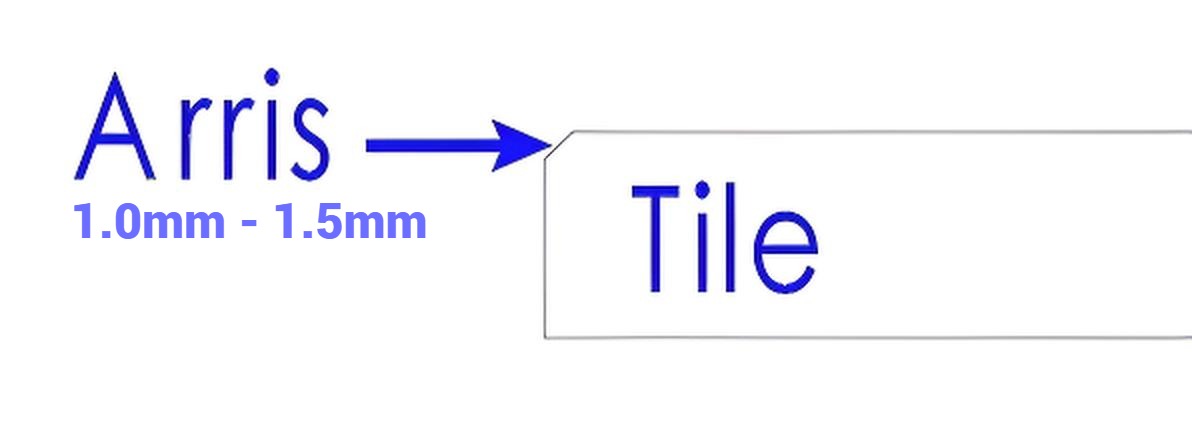
This recommendation commonly applies to:
However, some table tops are manufactured using a different construction method. In these cases, the brass, stainless steel, copper or aluminium trim may be fitted to the supporting substrate first, with the stone or marble bonded into position afterwards. This allows the metalwork to sit tightly against the finished surface and can produce an exceptionally fine visible joint between the metal and stone.
Where this method is used, the underside edge detail and substrate construction become just as important as the visible top edge. We therefore recommend discussing edge preparation requirements with both the stone supplier and metal fabricator before manufacture begins. For examples of completed projects, see our Table Top Metal Edge Trims page.
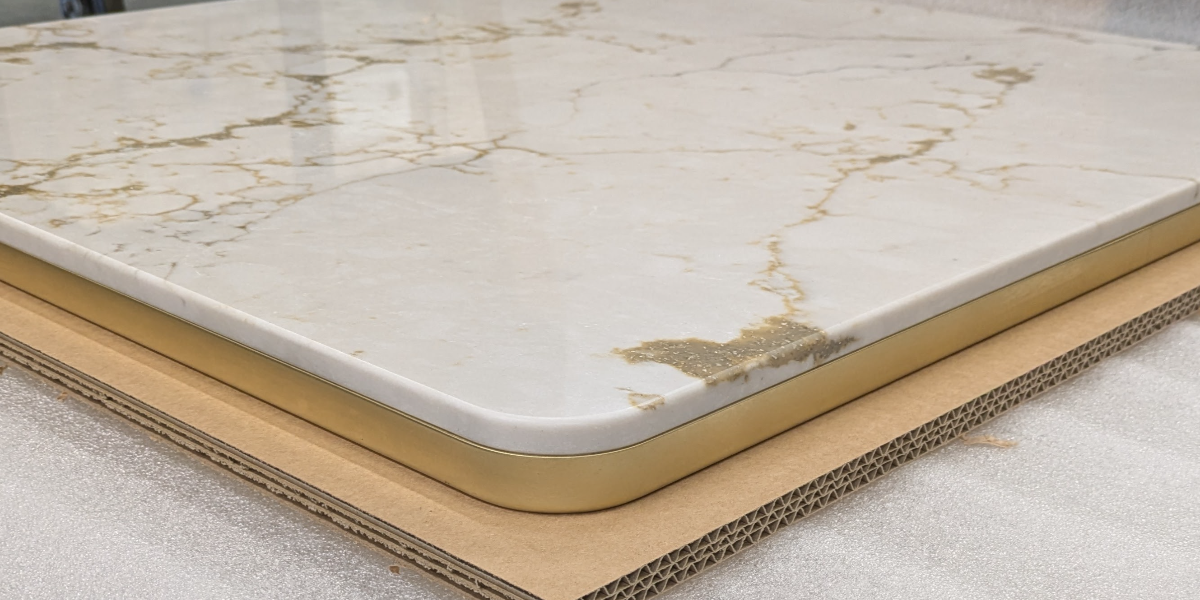
For round table tops, radius corners and shaped blanks, accuracy is critical. We strongly recommend that stone, marble, porcelain, glass or composite blanks are cut using CNC equipment rather than shaped by hand.
CNC-cut blanks provide consistent radii, cleaner curves and better alignment between the table top and metal trim. Hand-finished curves can vary slightly, and those variations can become more visible once a precise metal edge trim is fitted.
Customers often supply marble, stone or porcelain tops at around 20mm thickness but want a deeper, chunkier appearance without the weight and cost of solid stone.
One method is to bond the decorative surface to a CNC-cut moisture-resistant MDF sub-base. This builds up the overall depth of the table top and provides a secure substrate for mechanical fixings. It also allows edge trims to be mechanically fixed rather than relying solely on adhesives, improving long-term durability in commercial environments.
This approach is useful for:
For many metal edge trims, we prefer mechanical fixing rather than relying on adhesive alone. Adhesive-only trims can loosen over time, particularly where edges are knocked, picked at or exposed to thermal movement.
Mechanical fixings into a suitable substrate, such as MR MDF, help the trim resist peeling, movement and impact damage. Visible fixings can also become part of the design, especially when using brass, stainless steel or antique-finished screws and studs.
Flat-bar edge trims create a strong, bold perimeter detail and are commonly used on hospitality tables, feature furniture and thicker built-up tops. They are often face-fixed with decorative slotted screws or studs.
Pressed channel trims can create a refined, wipe-clean edge with a low lip standing slightly proud of the table surface. This style is often used where a neat, continuous perimeter detail is required.
Angle trims are suitable for slimmer tops and can wrap around the edge or underside depending on the construction. They are often used with laminate, timber and lightweight table tops.
Studded edge trims add a heritage, industrial or decorative appearance while also providing robust mechanical retention. Stud size, spacing and finish can be specified to suit the project.
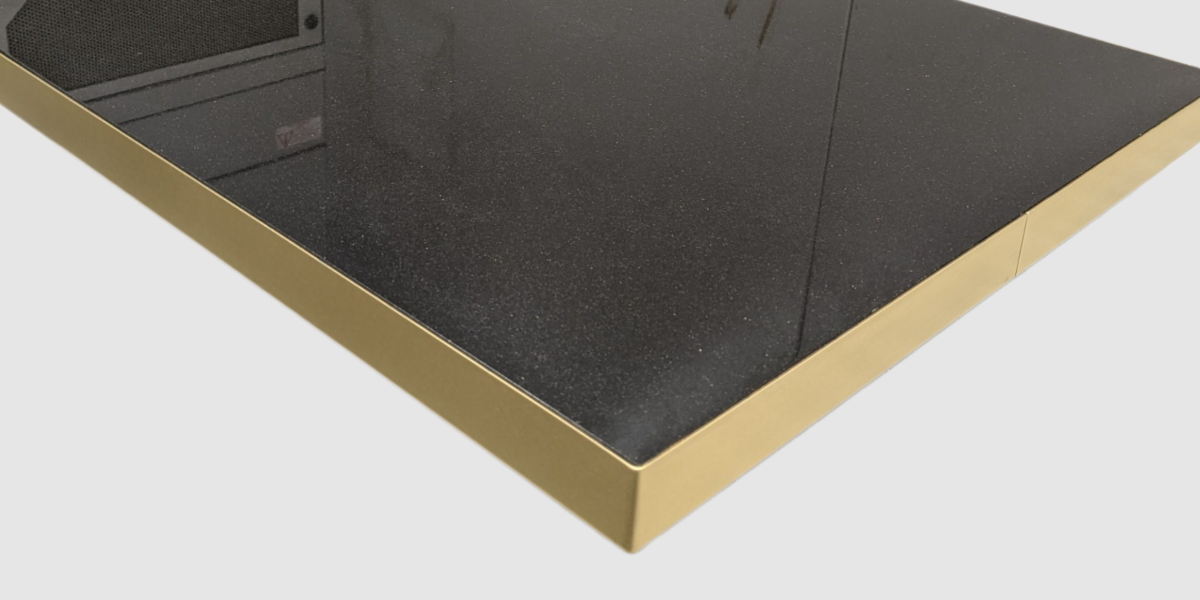
Metal edge trims can be manufactured for round, square, rectangular and bespoke shaped table tops. The shape of the top affects how the trim is formed, joined and fixed.
For related examples, see our bespoke round table tops and bespoke table tops.
Before ordering table top metal edge trims, it is important to confirm the main design and fabrication details. This helps avoid fit issues and ensures the finished trim suits the material, thickness and intended use.
Common options include brass, stainless steel, copper and aluminium. Brass is often the most popular for decorative furniture, while stainless steel is preferred for modern, hygienic and high-traffic interiors.
In many cases, yes. A small arris of approximately 1.0mm–1.5mm is often recommended on marble, stone, porcelain, ceramic or glass to reduce the risk of chipping. However, some built-up table tops use a different construction method where the metal trim is fitted first and the stone is bonded afterwards.
Yes. Metal edge trims can be fitted to porcelain table tops, provided the edge has been prepared correctly and the construction allows for secure fixing.
CNC cutting provides consistent radii and accurate curves, which helps the metal trim fit neatly around the edge. Hand-shaped curves can create small variations that become visible after the trim is fitted.
Fixing methods vary depending on the table top construction, but mechanical fixing is often preferred for long-term durability. Adhesive-only trims can be more vulnerable to movement, peeling and impact damage.
Yes. Metal Sheets Ltd manufactures bespoke table top edge trims to suit round, square, rectangular and custom-shaped tops in brass, stainless steel, copper and aluminium.
If you are designing table tops for a restaurant, hotel, retail space, office, private home or commercial furniture project, we can advise on suitable metal trims, finishes, fixing methods and fabrication details.
Visit our Table Top Metal Edge Trims page or contact Metal Sheets Ltd to discuss your requirements.


